In today’s fast-paced world, managing information can feel overwhelming. Between tasks, ideas, reminders, and life logistics, your brain is asked to hold more than it was designed for. That’s where the concept of a digital second brain comes in.
A digital second brain is a system that helps you store, organize, and recall information outside of your mind. Instead of relying on memory alone, you use a trusted tool to capture thoughts, plans, and details so your brain can focus on thinking, not remembering.
Let’s break down what a digital second brain is, why it matters, and how to build one using a tool designed for real life.
What is a “Digital Second Brain”?
A digital second brain is an external system that stores and manages information outside of your natural memory. Think of it as a digital helper that can keep track of everything on your mind, giving your brain a little extra room to breathe.
Here’s how it works: instead of trying to remember everything yourself, you capture your thoughts in this system. This could include:
- To-dos and deadlines
- Notes from conversations or experiences
- Personal preferences and insights
- Ideas you want to act on later
By offloading this information, you reduce mental clutter and improve focus.
Why digital matters: Unlike notebooks or scattered notes apps, a digital second brain can search, organize, remind, and adapt as your life changes.
In short, a second brain is like having a personal assistant for your mind, helping you stay organized and stress-free.
Why a Second Brain Matters
In today’s fast-paced world, managing all the information we encounter can be overwhelming. Here is why a second brain might be just what you need:
- Information Overload: We consume more information than ever before. Emails, messages, appointments, ideas, and responsibilities pile up quickly. A digital second brain gives you a single place to store and organize it all, so nothing lives only in your head.
- Brain Fog: Have you ever felt like your brain is in a cloud, making it hard to think clearly? This “brain fog” can happen when you’re juggling too many tasks or trying to remember a lot of details. When your brain is overloaded, clarity suffers. By having a digital second brain, you can clear out this mental clutter and reduce “the fog”.
- The Forgetting Curve: Research shows that we forget most information shortly after learning it unless it’s reinforced. A digital second brain preserves important insights and makes them easy to retrieve when they matter most.
- Mental Clutter: Trying to track everything mentally leads to stress and overwhelm. A second brain acts as an extension of your memory, allowing you to think more clearly and feel more in control.
Benefits of a Second Brain
A well-built digital second brain can transform how you manage daily life.
Increased productivity: Focus on priorities instead of remembering details
Reduced stress: Fewer forgotten tasks and last-minute scrambles
Improved creativity: Ideas are captured and connected instead of lost
Better recall: Information is available when and where you need it
So, think of your digital second brain as your personal life organizer . It’s there to help you manage the chaos, spark creativity, and keep stress at bay.
Building a Digital Second Brain
Ready to build your second brain? It’s easier than you might think!
1. Make Mental Offloading a Habit
A second brain only works if you use it consistently. Capture thoughts, reminders, and ideas the moment they come up. This practice, called “mental offloading”, keeps your mind clear and prevents information from slipping through the cracks.
2. Pick The Right Tool
Chose an All-In-One
Your digital second brain should live in one place. Using multiple apps often creates more friction than clarity. Look for a tool that combines notes, tasks, reminders, and personal insights.
Why digital beats paper:
A physical notebook or journal is a classic choice for organizing your thoughts. Many people find writing by hand to be a helpful and calming practice. Notebooks are helpful for reflection, but they’re hard to search, don’t remind you, and can’t adapt to changing plans.
For a more comprehensive approach, digital tools offer several advantages. They combine note-taking, task management, and reminders all in one place, making it easier to stay organized.
Best Digital Second Brain: MYNDIFY
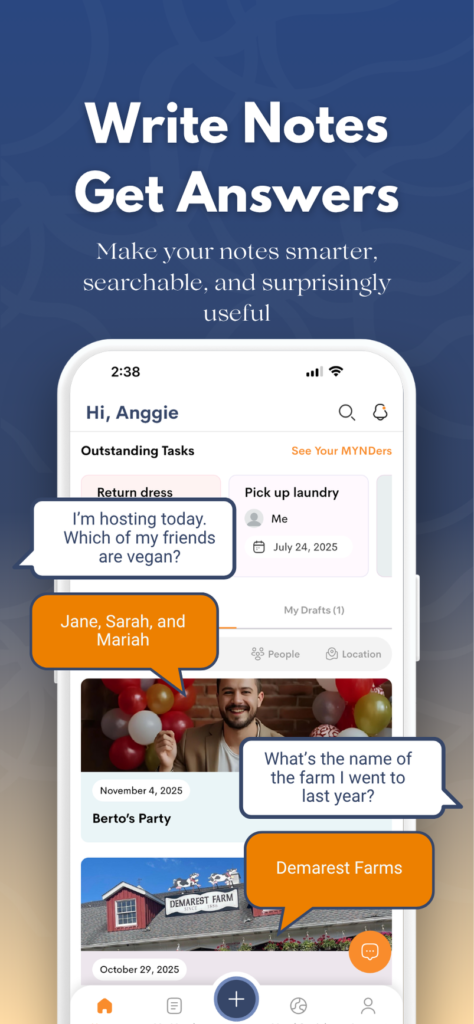
Apps like MYNDIFY are designed specifically for personal information management. It’s all-in-one system brings together your notes, tasks, and journaling in a single platform. With features like smart reminders and a FREE memory assistant, MYDNIFY helps you keep everything on track and accessible.
3. Organize Information
As you start adding information to MYNDIFY, organize it into categories and/or tags. Instead of dumping random notes, organize information by experiences, people, or situations. This improves recall and makes insights more actionable.
Keeping things organized ensures you can quickly find what you need without digging through a cluttered system.
Tip: Notes tied to real-life interactions are easier to remember and use later than isolated lists.
4. Make Information Actionable
A digital second brain isn’t just for storage. It should help you act.
Use reminders, deadlines, and location-based alerts to surface information at the right moment. For example:
- Get reminded of your grocery list when you enter the store
- Recall a preference before a meeting or event
- Trigger reminders tied to specific places or situations
MYNDIFY’s smart reminders are built to do exactly this, turning stored insights into timely action
5. Review and Adjust
Your second brain should evolve with your needs. Periodically review what you’ve stored, adjust categories, and refine how you capture information. A flexible system stays useful long-term.
Why MYNDIFY Works as a Digital Second Brain
MYNDIFY was built around the idea that your brain shouldn’t be your storage unit. It helps you:
- Capture insights tied to real-life experiences
- Organize personal knowledge without overthinking structure
- Receive reminders when information is actually useful
- Reduce mental load instead of adding another system to manage
Rather than replacing your brain, MYNDIFY supports it.
Final Thoughts
A digital second brain isn’t about productivity for productivity’s sake. It’s about creating space, clarity, and calm in a world that constantly demands more from your mind.
With the right system in place, you stop relying on memory alone and start living with intention.
Your brain is for thinking. Let your second brain handle the rest.
Images from Freepik